
The Trust Gap
Updating the Diffusion of Innovation model for AI, strategizing for trust-building, and navigating AI adoption hurdles.

🔭 Signal: Planning for AI Adoption in 2026
Consumer adoption of innovation comes first. Enterprises come later, usually while insisting they’re “preparing” for the change.
Think about where we’ve seen this before:
Video (2010s)
Mobile (2000s)
Internet (1990s)
PCs (1980s)
For the 2020s, the wave is AI. People everywhere are using it. Expecting it. Depending on it. Just not yet at work.
Pew’s latest AI study shows the tipping point is here. This is when employees are using AI at home and then very predictably wondering why their workplace feels so behind the times.
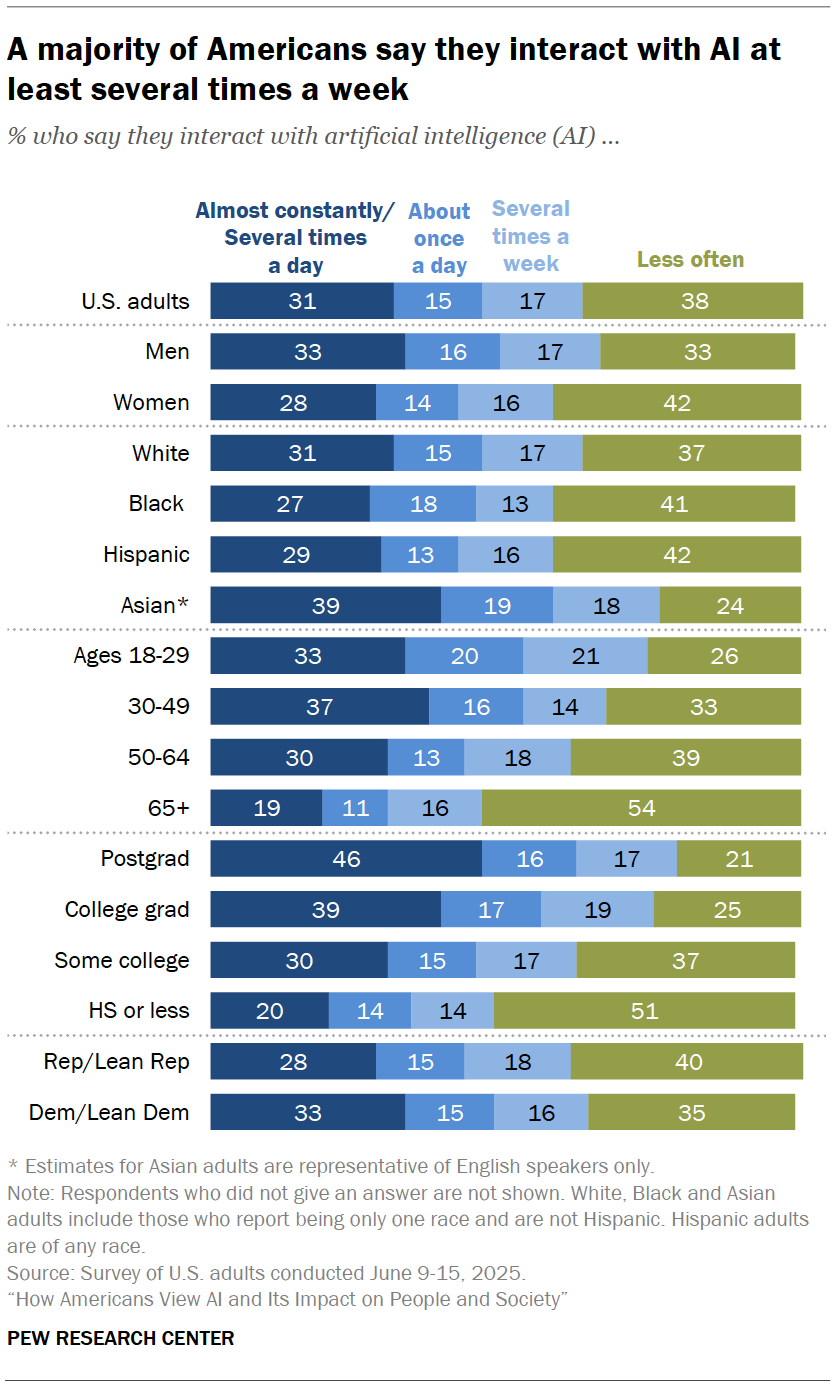
Meanwhile, ‘tis the season teams are locking in 2026 budgets, nearly all with “AI acceleration” bullet points baked in. The trouble is, AI is currently sitting right where adoption usually breaks: The Trust Gap.
Ev Rogers (no relation) mapped how innovations spread over 60 years ago. In the 1990s, Geoff Moore showed us where they stall: The Chasm.
Today, AI faces the same stall point:
Architects are building amazing things faster than ever
Catalysts are piloting at speed and evangelizing like crazy
Integrators are waiting on workflows that actually work in their hands
Conformers need policies and proof before they’ll join in on anything
Legacy Loyalists are holding back and digging in
🧠 Strategic (Human) Prompt: You Are Where?
You probably have each of these in your org today: Architects, Catalysts, Integrators, Conformers, Legacy Loyalists. Map them.
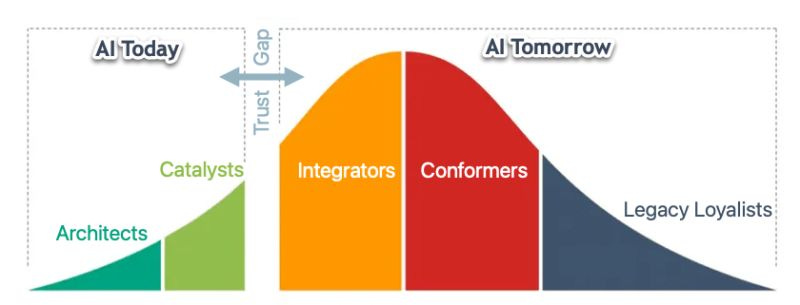
Now ask yourself: How do our Catalysts build trust with Integrators?
➖ Strategic Subtraction: Integrators or Bust
Proof of Concept is useful for Architects and Catalysts. Everyone else doesn’t care that something could work. They care that it does work.
The next part of the adoption wave is the Integrators (traditionally known as the “Early Majority”). They care about what they can integrate into their existing workflow and build upon. They will do the work to integrate only what they can depend on.
So...of all the AI pilots so far, which have the most potential appeal to the Integrators?
Leadership funds the pilots, but Integrators decide if AI actually sticks. Refocus projects to win them over. Or watch implementations stall out.
🛣️ Analogy of the Week: Freeway Onramp

AI Transformation is like an onramp to the freeway. If it’s short, crooked, or missing guardrails, cars might lurch onto the road...but pileups follow at freeway speeds.
The faster the highway, the longer and smoother the onramps need to be. Cars need time, stability, and visibility to reach speed before merging in. The same is true for AI: speed at scale requires room for smooth, safe acceleration. Reckless jumps into traffic are dangerous for everyone.
🎵 Closing Notes
AI adoption isn’t waiting for anyone. Employees are already ahead. Budgets are being set. The Trust Gap is upon us.
Integrators hold the keys to real implementation. Win them, and AI can pay off. Lose them, and you’re stuck at pilot forever. Helping organizations tip that balance is what I do.
Until next time,
Sam Rogers
Trust Architect for AI Transformation
Snap Synapse – from AI promise to AI practice
📅 Book a call